

Moses and Scientists Agree: Do Hard Things
As You Simplify, Don't Shrink Away


Dear Reader,
As I said two weeks ago, I’ve been traveling, and posting has been on and off. Better by next week.
I’d love to welcome the eight new Paid Subscribers to The Anglican. If you’ve been holding back, join us. We are building something here.
Grace and peace,
David Roseberry +

Moses and Scientists Agree: Do Hard Things
“Then Moses went up from the plains of Moab to Mount Nebo… and the Lord showed him all the land.” (Deuteronomy 34:1)
While studying the life of Moses recently, I came across a fascinating body of research in neuroscience. It has a perfect application to those in The Fly Away Zone.
Researchers have been studying what they call SuperAgers—men and women in their eighties whose memory, mental sharpness, and cognitive abilities resemble those of people decades younger.
The research is still developing, but one observation appears repeatedly. Many of these older adults remain deeply engaged with life.
They are fully present:
They continue learning.
They remain curious.
They embrace new challenges.
They stay connected to people.
They refuse to retreat into a smaller world.
Moses and the Mountain
As I read about these SuperAgers, I immediately thought of Moses. Near the end of his life, Moses climbs a mountain named Mt. Nebo. That detail is easy to miss. But it should not be. I’ve been there. It is a 2680-foot climb from the Jordan River Valley (sea level), plus another 1200 above the Dead Sea surface.
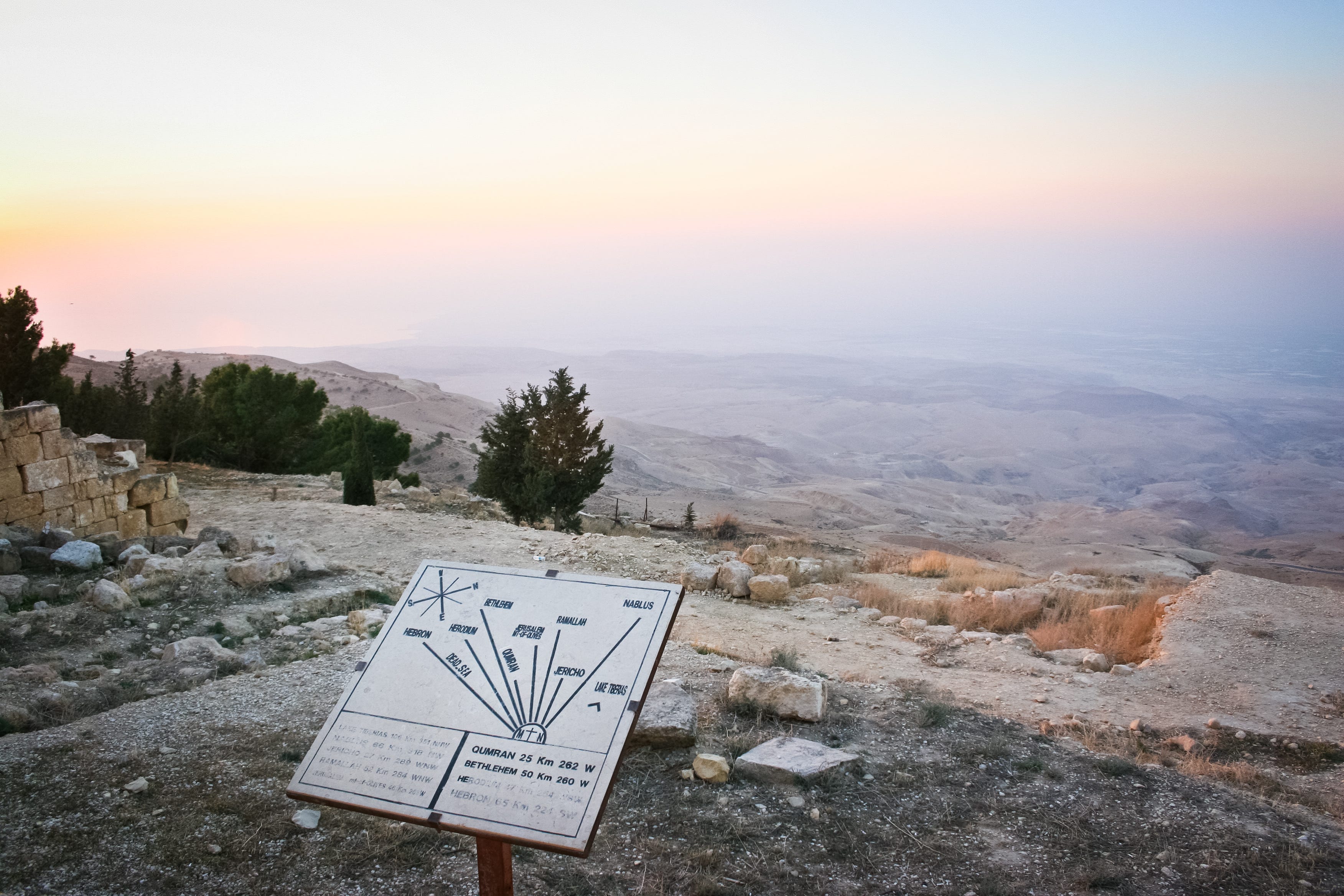
.
Scripture tells us:
“Then Moses went up from the plains of Moab to Mount Nebo…” (Deuteronomy 34:1)
He wasn’t carried.
He wasn’t assisted.
He walked it.
At 120 years old, with an entire lifetime behind him and only moments ahead of him, Moses is still climbing. Still going up. Going somewhere. There is something profoundly instructive about that.
“His eye was undimmed, and his vigor unabated.” (Deuteronomy 34:7)
That was God’s gift to him, to the Israelites, and to the rest of biblically faithful people. Imagine where we’d be without Moses!
But it is also true that Moses spent his entire life embracing new assignments, new responsibilities, and new acts of obedience. When you survey his life, it was a life of doing hard things.
The Life of Moses
Think about his journey. Moses was never allowed to settle for very long.
He was a prince in Egypt.
Then a fugitive on the run.
Then a shepherd in Midian.
Then a reluctant prophet.
Then a confrontational leader standing before Pharaoh.
Then a lawgiver.
Then a judge.
Then a wilderness guide.
And in the last segment of his life, Moses was a mentor to Joshua, who would lead after him.
For more than a century—about 120 years alive—Moses kept adapting to what God placed before him.
He kept learning.
Kept trusting.
Kept growing.
Kept climbing.
The final scene of his life—climbing Mt. Nebo—feels fitting.
The last moments of his life were not a retreat. It was an ascent.
Simplify without Shrinking
One of the great temptations of The Fly Away Zone is to assume that meaningful growth belongs to younger people.
You have done your learning. Raised your family. Built your career. Served your church. Some people in The Fly Away Zone might think the last part of life is about coasting or drifting in an ocean of ease.
And yes, in this series, I have encouraged you to pull back, do less, focus, and simplify. But there is a difference between simplifying and shrinking.
Moses offers another vision of aging: There is still something to learn. Still something to become. Still another mountain to climb. He was emotionally, intellectually, and relationally engaged with his people and with God to the end of his natural life.
What does that mean for us in The Fly Away Zone?
You can still read difficult books, learn new skills, deepen your prayer life, strengthen your body, cultivate friendships across generations, mentor younger believers, challenge old assumptions, and remain open to surprise.
Remember, one of the great dangers of aging is not weakness. It is rigidity. The refusal to keep growing. Stretching. Learning.
Ask Yourself:
What “mountain” are you being invited to climb in this season of life?
Moses was still embracing new assignments and challenges at 120 years old. What is one area where God may be calling you to keep learning, growing, serving, or trusting rather than settling into comfort or routine?What is the difference between simplifying and shrinking?
As we age, it is wise to simplify certain responsibilities and commitments. But how can we simplify our lives without becoming smaller, more isolated, less curious, or less engaged with God and others?
☩
The Anglican is the Substack newsletter for LeaderWorks, where I share insights, encouragement, and practical tools for clergy and lay Christians. I’m also an author of over a dozen books available on Amazon.
If you are a Paid Subscriber, thank you! Thank you for supporting The Anglican and the ministry of LeaderWorks. If you are not a subscriber, please consider becoming one today.
Hi David. My newest adventure is creating a bird sanctuary in my backyard. It’s hard work, and I am learning a lot as I go along…a lot about myself and a lot about birds and their different characteristics and needs. I’ve had a bad habit of taking on too many projects, and then not carrying any of them to fruition. So I am determined with God‘s help to finish what I’ve started, little by little, one step at a time, like Jesus said to Martha ‘just one thing is needed.’
I journaled quite profusely after my husband died. Part of one poem has given me the determination to press on: ‘I am not dead. I am alive. God has ordained me to flourish and thrive.’
Thanks for helping me fly over well.
Thanks so much for this series. In 2022 I retired after 40 years practicing neurology not really knowing what sort of turns late life could take but seeking God’s guidance in service to His body. In February I was ordained to the vocational diaconate and have discovered that it is still a day by day seeking and unfolding. I think the Lord has been using your wise words to help me focus. Thank you. Thanks be to God.